


/file/publisher-c1a3f893382d2b2f8a9aa22a654d9c97/2024/10/707c06993cf1d651737f4250d2c5196c.jpg)

Urban Renewal Act: Hard to believe Anwar's promise, Dr M says
Former premier Dr Mahathir Mohamad today claimed that he finds it difficult to believe Prime Minister Anwar Ibrahim’s statement that the Urban Renewal Act will not affect the fate of the Malay community in urban areas.
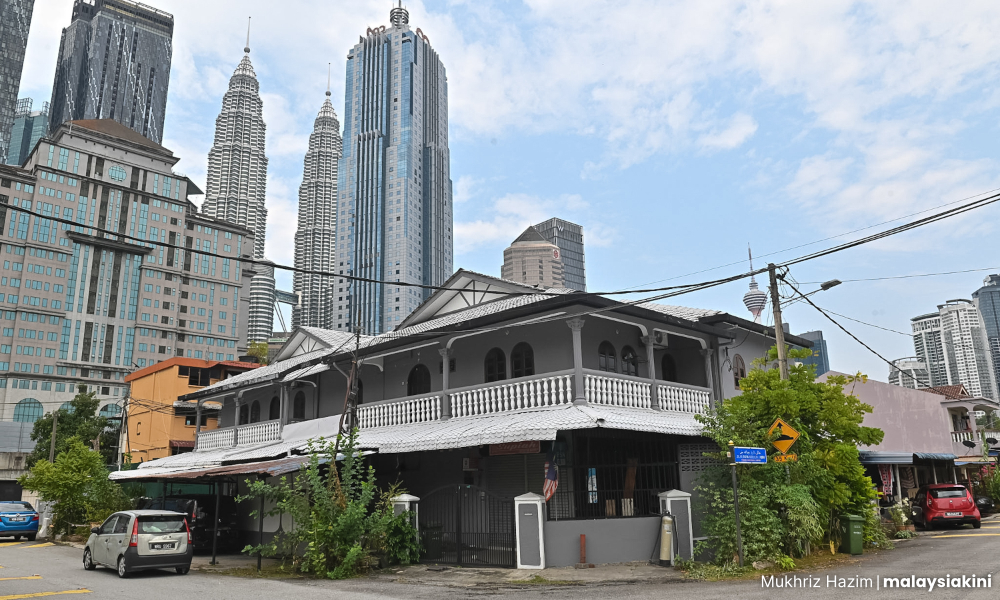
Mahathir questioned how Anwar could guarantee the protection of the Malay community when the government had allegedly failed to resolve the land issue in Kampung Sungai Baru, Kuala Lumpur.
Summary
Former premier Dr Mahathir Mohamad finds it hard to believe that the Urban Renewal Act will not affect Malays in urban areas.
Mahathir questions Prime Minister Anwar Ibrahim’s promise and commitment, citing unresolved issues by residents of Kampung Sungai Baru, Kuala Lumpur.
Former premier Dr Mahathir Mohamad today claimed that he finds it difficult to believe Prime Minister Anwar Ibrahim’s statement that the Urban Renewal Act will not affect the fate of the Malay community in urban areas.
Mahathir questioned how Anwar could guarantee the protection of the Malay community when the government had allegedly failed to resolve the land issue in Kampung Sungai Baru, Kuala Lumpur.
According to Mahathir, Malaysia’s second prime minister Abdul Razak Hussein said cities should include all ethnic groups rather than be dominated by any particular race.
The veteran politician went on to repeat allegations that enforcement of the Act would see only the wealthy and business owners able to afford living in urban areas, leaving the future of the Malay community uncertain.
“This person (Anwar) always lies. Every time he opens his mouth, it’s a lie. He makes all kinds of promises but doesn’t fulfill even one.
“If we just approve (the Act), they will use the law against us,” he said at a press conference at the Perdana Leadership Foundation in Putrajaya today.
The press conference was held alongside a group of Kampung Sungai Baru residents protesting the government’s acquisition of their land for development.
Reasonable compensation
Mahathir said during his second tenure as prime minister in 2018, he froze all projects in Kampung Sungai Baru that had become controversial.
He also claimed that he had requested reasonable compensation for the acquired land.
“I asked for reasonable compensation, with a price of RM3,000 per square foot. If developers buy at RM3,000 per square foot, then the residents can afford to buy luxury homes if they are built,” Mahathir explained.
No forced eviction assurance
Previously, Anwar assured that the Act would not grant the government the power to evict any original property owners, regardless of ethnicity.
He stressed that the law would not include any provisions allowing forced eviction and that the status of the land - whether Malay reserve land or freehold - would remain unchanged.
“It is completely untrue that original landowners - regardless of ethnicity - will be forcibly removed from their property. The original land status, whether Malay reserve or freehold, will not change.
“The government will ensure that every original property owner understands their rights and the protections afforded to them,” he said in the Dewan Rakyat.
READ MORE: KINIGUIDE | Urban Renewal Act - what do we know so far?
Mahathir, however, once again repeated his warning that if the Urban Renewal Bill is passed and enacted, the Malay community in Malaysia could face the same fate as Malays in Singapore.
“Malays who used to live in Malay villages were scattered so that they could not stay together. Two Malays were placed in one area, two in another flat, and now they have no group, no leaders.
“This is what will happen in Malaysia if we follow Singapore’s example,” he added.
Mahathir conceded that urban renewal is necessary but insisted it should not sideline the original residents.
‘Malays will not be sidelined’
At a press conference this evening, after Mahathir’s press conference, Anwar’s press secretary Tunku Nashrul Abaidah said the prime minister is again refuting allegations against the Urban Renewal Act.
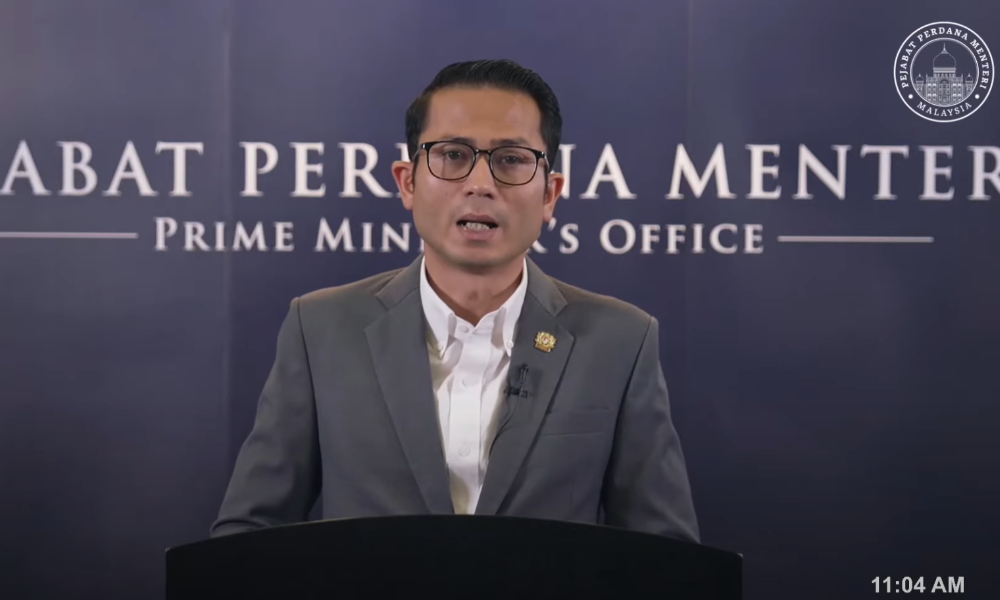
He said the prime minister has reiterated that the law will not contain provisions for evicting homeowners and landowners.
“Therefore, the issue of Malay bumiputera being sidelined from urban development does not arise, because the main goal is to ensure improvements to the quality of life of urban communities – and by extension the quality of life of Malay communities as well,” he said, without elaborating on the allegations being made or naming those who made them.
/file/publisher-c1a3f893382d2b2f8a9aa22a654d9c97/2023/08/6f96bdbe382ca19b4c9620462e0bef5a.jpg)
/file/publisher-c1a3f893382d2b2f8a9aa22a654d9c97/2024/10/e9a0e6d79e11630b7e18db5b23f7d78d.jpg)
/file/publisher-c1a3f893382d2b2f8a9aa22a654d9c97/2024/07/98abc9778661734dcf622c00dcdc6528.jpg)
/file/publisher-c1a3f893382d2b2f8a9aa22a654d9c97/2019/10/5aa95287f19913507a7d4d7589e671be.jpg)
/file/publisher-c1a3f893382d2b2f8a9aa22a654d9c97/2024/09/587acafc97bf5f9fbab10020b7d58d5e.jpg)
/file/publisher-c1a3f893382d2b2f8a9aa22a654d9c97/2025/02/ece13da3395c02fc2a8bcd187e648e3a.jpg)
/file/publisher-c1a3f893382d2b2f8a9aa22a654d9c97/2024/07/9ecb4a439d53f28ddd4d633b78fb4797.jpg)
/file/publisher-c1a3f893382d2b2f8a9aa22a654d9c97/2020/10/475c419e1da8f5f879af799c999cd14d.jpg)


Are you sure you want to delete this comment?
This action cannot be undone.